
ECOMMERCE SEO EXPERTS
Ecommerce SEO Services
in Dubai That Turn Product
Searches Into Sales
Technical SEO, category and product page optimization, and AEO/GEO strategy — built specifically for online stores selling to Dubai and UAE customers.
Ecommerce SEO services in Dubai help online stores rank higher for product and category searches, fix technical issues unique to large catalogs, and win visibility in Google Shopping and AI-generated shopping answers. Effective ecommerce SEO for the UAE market combines catalog-level technical fixes, product page optimization, and AEO/GEO structuring so your store gets found — and recommended — by both search engines and AI tools.
Dominate Search Rankings in Dubai & UAE
Drive high-intent GCC organic traffic with advanced SEO & AI search optimization.
Full-Stack Expertise
Covering both custom development and ROI-focused digital marketing campaigns.
100% Confidential
Your credentials, project scopes, and product details are safe with us.
What are your core targets?
Select the main areas where you need project support.
SEO & Organic Growth Showcase
Explore how we design crawl-efficient architectures, optimize category semantic indexes, and attribute long-term organic ROI to scale your search visibility.
Organic Traffic Engineered for Scalability
We resolve crawl errors, map product feeds, and align your category taxonomy with real search queries to drive compounding search conversions.
- Rank for high-converting category and product searches.
- Structured schemas designed to capture rich indexing features.
- Predictable, long-term search conversions without paying per click.
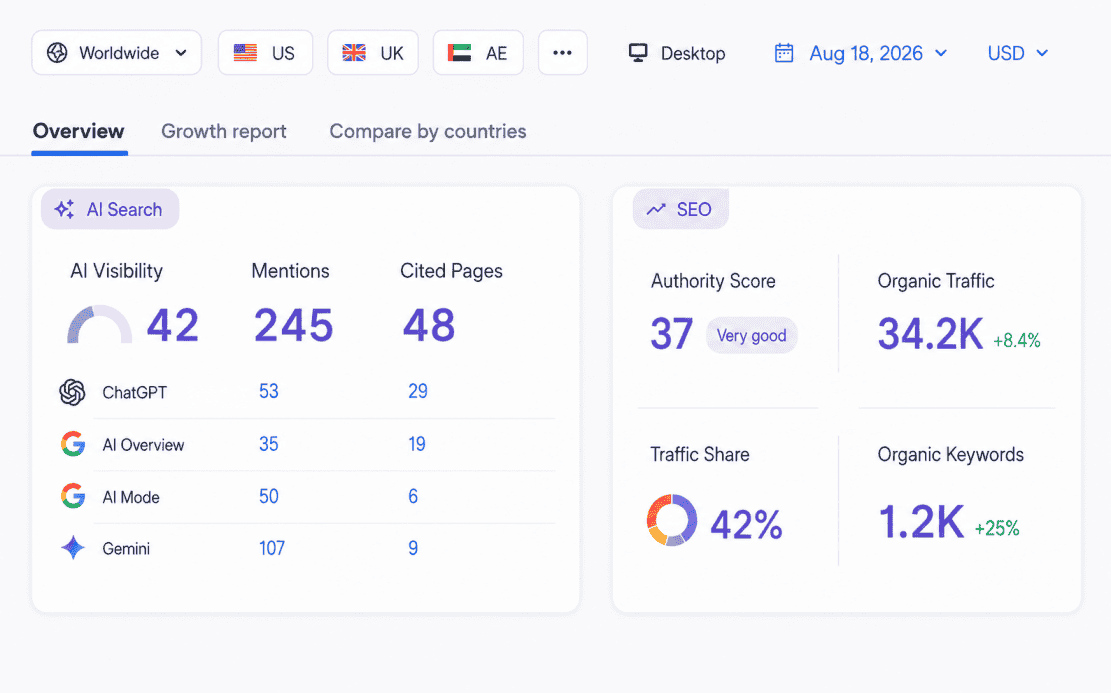
Compounding Growth & Long-term Authority
Watch your search engine visibility compounding. By optimizing content mapping, local backlinks, and crawl prioritization, we secure traffic that builds equity day after day.
- Increase ranking presence for transactional keyword clusters.
- Durable authority acquisition via white-hat media outreach.
- Attribution tools verifying clear revenue generated from search queries.
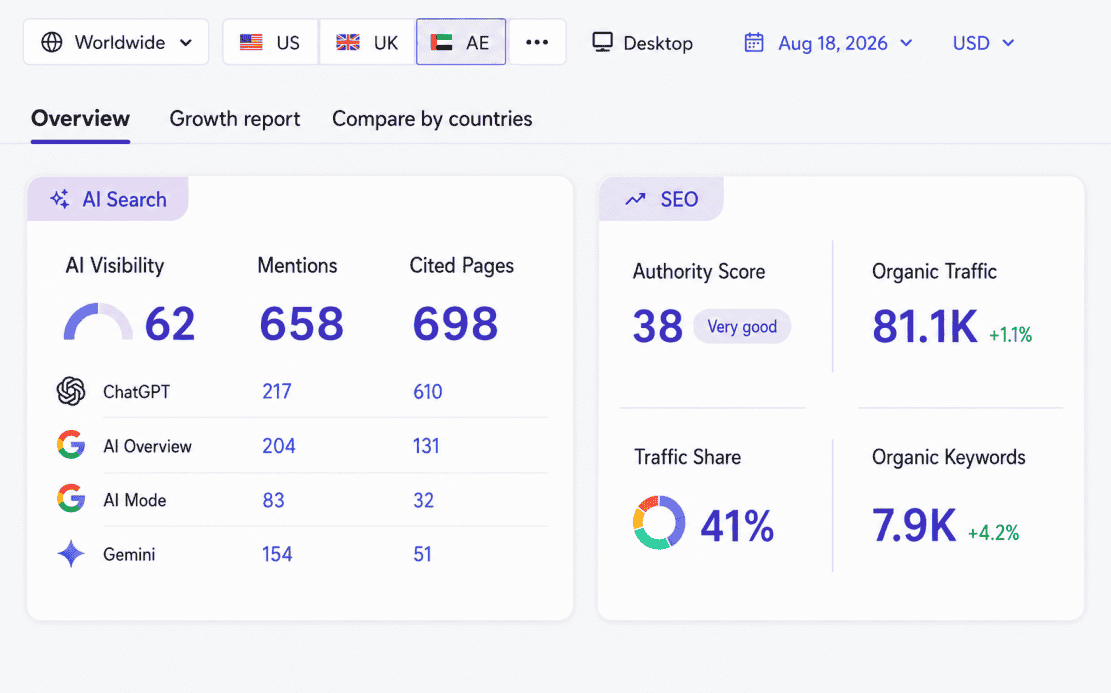
Key Takeaways
Ecommerce SEO isn’t general SEO. Product variants, faceted navigation, and large catalogs create technical problems a generic SEO approach won’t catch.
Faceted Technical Audits
Ecommerce SEO isn’t general SEO. Product variants, faceted navigation, and large catalogs create technical problems a generic SEO approach won’t catch.
High-Intent Product Pages
Product pages need to answer buyer questions directly — specs, availability, pricing clarity — not just contain keywords.
AEO/GEO & AI Overviews
AI shopping answers are a new front. Queries like 'best site to buy [product] in Dubai' are increasingly answered inside Google AI Overviews or ChatGPT before a click happens — your store needs to be structured to be cited there.
Catalog Technical Health
Technical health drives everything. Site speed, Core Web Vitals, and clean indexation matter more for ecommerce than almost any other site type, given catalog size and filter/URL complexity.
Local & Bilingual Optimization
Local + bilingual matters. UAE shoppers search in both English and Arabic, and Dubai-specific intent (delivery, availability, local pricing) shapes what actually converts.
Compounding Long-Term Growth
Results compound with catalog size — the more products properly optimized, the more compounding organic traffic your store captures over time.
Why Isn’t Your Online Store Ranking for Product Searches?
Ecommerce sites face a different set of ranking obstacles than a typical business website — and most generic SEO advice doesn’t address them.
1. Technical issues unique to online stores
Product variants (size, color), filters, and sorting options can generate thousands of near-duplicate URLs, confusing search engines about which page to rank. Combined with slow load times on image-heavy product pages, this quietly caps visibility before a single product description is even read.
2. Thin or templated product content
Manufacturer-supplied product descriptions, copied across dozens of competing stores, give search engines no reason to rank your page over anyone else’s. Category pages that are just a product grid with no supporting content miss the chance to rank for the broader research-stage searches that lead to a purchase.
3. Missing structured data
Without proper product schema (price, availability, reviews), your listings miss out on rich results in Google search — and increasingly, miss out on being surfaced at all in AI-generated shopping answers, which rely heavily on structured, machine-readable product data.
4. No strategy for AI-driven shopping search
A growing number of shoppers now ask AI tools directly for product recommendations instead of browsing Google search results. If your store’s content and data aren’t structured for AI extraction, you’re excluded from an increasingly important discovery channel — regardless of how well you rank in traditional search.
What Happens If You Don’t Fix This?
Every missed ranking is a sale going to a competitor’s store instead of yours — and unlike a services business, an ecommerce store’s revenue is directly and immediately tied to product page visibility. Paid ads can offset some of this, but margins on ecommerce are often thin enough that a heavy reliance on paid traffic quietly erodes profitability. Organic SEO is the channel that keeps generating product page traffic without a per-click cost eating into every sale.
Plugging Leakages
Block crawling loops, variants, and thin duplicate content setups.
Direct Answers
Match actual search parameters to buy-intent pages.
Structured Rich Snippets
Integrate pricing, reviews, and stock feeds directly to indexing.
AI Optimization
Structure categories to trigger recommendations inside LLMs.
What Do Ecommerce SEO Services in Dubai Actually Include?
We resolve technical architecture bottlenecks, build out semantic content, and align your brand catalog with organic feeds and AI entities.
Resolving duplicate content from product variants, filters, and faceted navigation. Site speed and Core Web Vitals optimization for image- and script-heavy ecommerce templates. Crawl budget management for large catalogs, so search engines index the pages that matter. Product, Offer, and Review schema markup implementation.
Rewriting or restructuring product descriptions around real buyer questions, not manufacturer copy-paste. Category page content that captures research-stage search intent, not just a product grid. Keyword mapping across product, category, and collection pages to avoid internal cannibalization.
Google Merchant Center and Google Shopping feed optimization. Backlink strategy built around relevant ecommerce and industry publications. Google Business Profile optimization for stores with a UAE physical presence or showroom.
Structuring product and category content so it can be directly cited in AI Overviews and AI shopping assistant answers. Building the structured data and clarity AI systems need to recommend your store for a given product query confidently. Entity and brand authority building, so your store is recognized as a credible source for its product category — not just another listing.
Buying guides, comparison content, and FAQ-style content mapped to pre-purchase research queries. Seasonal and campaign-aligned content calendars relevant to UAE shopping patterns.
How Is This Different From General SEO?
General SEO treats every page the same. Ecommerce SEO has to solve problems at the scale of a catalog — thousands of URLs, variant logic, feed data, and structured product information — while also optimizing for how people research and compare products before buying, both on Google and increasingly through AI shopping assistants.
How We Engineer Dubai Ecommerce SEO
A proven process. Relentless quality. Built for organic growth, designed to scale.
Technical Dubai SEO: Fixing indexing blockages, core web vitals, crawl budgets, and localized schema structures for UAE search engines.
Localized Keyword Architecture: Mapping search terms for both Dubai/UAE local markets, matching buyer intent across Google and AI search agents.
Clean Backlink Authority: Acquiring high-authority backlinks from authentic Gulf publications, avoiding spam networks to ensure brand safety.
Merchant Feed Optimizations: Refining your Google Merchant Center products for rich, optimized schema structures to dominate Google Shopping tabs.
AI Search AEO/GEO: Formatting page content elements so modern AI search assistants (Perplexity, ChatGPT) cite and recommend your brand.
Revenue Analytics: Integrating custom GA4 and GTM tags to attribute ranking changes directly back to actual completed UAE store orders.
What’s the Process for Getting Started With Ecommerce SEO?

Ecommerce Audit (Week 1)
A full technical, on-page, and catalog-structure audit — identifying duplicate content issues, indexation problems, and product/category pages losing visibility to competitors actually ranking for your terms in the UAE.

Strategy (Week 1–2)
A keyword and content roadmap organized around your product taxonomy, prioritized by revenue potential rather than raw search volume — plus an AEO/GEO plan for which product categories should be structured to win AI shopping citations first.

Implementation (Ongoing, Month 1+)
Technical fixes, product/category page optimization, and schema implementation rolled out in prioritized sprints — starting with your highest-revenue or highest-opportunity product lines.

Authority & Feed Optimization (Ongoing)
Backlink acquisition, Google Merchant Center feed refinement, and Google Business Profile work (where applicable) to support both organic rankings and shopping visibility.

Reporting & Iteration (Monthly)
Reporting tied to rankings, organic traffic, and — where trackable — organic-driven revenue, with the strategy adjusted based on which product categories are actually moving.
Compounding catalog
performance is our priority
Whether you need catalog cleanups, schema structures, or search engine mapping, we scope to what your store needs.

Catalog Technical Diagnostics
GA4, Search Console catalog maps, filter canonicalization logic, and GTM data layer verification.
Structured Schema Deployments
Deploying automated pricing, reviews, and stock availability schemas to rank in organic feeds.
Category Layout Optimization
Aligning research-stage query parameters to collection pages to capture pre-purchase search intents.
AEO/GEO Semantic Feeds
Structuring content elements so AI systems can easily parse, citation-map, and recommend your store.
Why Choose Digital Edge 360° for Ecommerce SEO in Dubai?
The methodology behind this approach was built over 5 years of hands-on SEO work, including 2 years leading an SEO team, most recently at ThatWare LLP — with a niche focus specifically on ecommerce SEO: technical fixes at catalog scale, product/category optimization, and the emerging AEO/GEO discipline applied to shopping search.
That experience was built serving ecommerce businesses in the Indian market. This same proven, ecommerce-specific methodology is now being brought to Dubai and the wider UAE — with the added advantage of specializing early in AI shopping search optimization, a space most local agencies haven’t built a dedicated process for yet.
Ecommerce is the only focus, not a side service
The strategy is built around catalog structure, product data, and shopping intent from the start — not a general SEO checklist adapted for a store.
Early expertise in AI shopping visibility
As AI tools increasingly answer 'what should I buy' queries directly, structuring your store to be cited in those answers is built into the process, not bolted on.
Team-lead-level strategic thinking
Shaped by experience managing SEO delivery outcomes, not just executing individual tasks.
Transparent, revenue-oriented reporting
Tracking what actually matters to a store: rankings, traffic, and where possible, the revenue impact of organic visibility.

Ready to Get Started?
We structure custom campaigns optimized for real conversion results.
Frequently Asked Questions About Ecommerce SEO in Dubai
Clear answers to common questions about ecommerce SEO.
Ecommerce SEO deals with challenges specific to online stores — duplicate content from product variants and filters, large-scale crawl budget management, product feed optimization for Google Shopping, and structured data for pricing and availability — problems a generic SEO approach for a standard business website typically isn’t built to solve.
Cost depends on your catalog size, platform (Shopify, WooCommerce, Magento, etc.), and the scope of technical work needed. A free audit is the most accurate way to scope pricing for your specific store rather than relying on a generic package price.
Most stores see measurable ranking and traffic improvements within 3–6 months, with compounding gains as more of the catalog gets optimized. Larger catalogs may see category-by-category results roll out in phases rather than all at once.
Yes — organic SEO and Google Shopping ads work well together. Feed and product data optimization done for SEO purposes (accurate titles, structured data, pricing clarity) also improves Shopping ad performance, and the two channels combined typically outperform relying on either alone.
AEO (Answer Engine Optimization) structures your product and category content so it can be directly cited by AI-generated shopping answers — like Google AI Overviews or ChatGPT recommending “where to buy” a product. As more shoppers research through AI tools before clicking a search result, stores without AEO-ready content and data risk being excluded from that recommendation entirely.
Yes — UAE shoppers search differently across English and Arabic, and a proper ecommerce SEO strategy accounts for both, from keyword research through product content structure, rather than optimizing for only one language segment of the market.
Yes — ecommerce SEO principles apply across platforms, though the specific technical implementation (schema, URL structure, crawl handling) differs by platform. The audit identifies platform-specific issues alongside general ecommerce SEO opportunities.
Get a free, no-obligation SEO audit of your online store. You’ll get a clear picture of exactly what’s holding your product and category pages back, and a prioritized roadmap for fixing it — grounded in a methodology built specifically around ecommerce SEO.
No generic reports. No copy-paste recommendations. A real audit, built around your store and your catalog.